


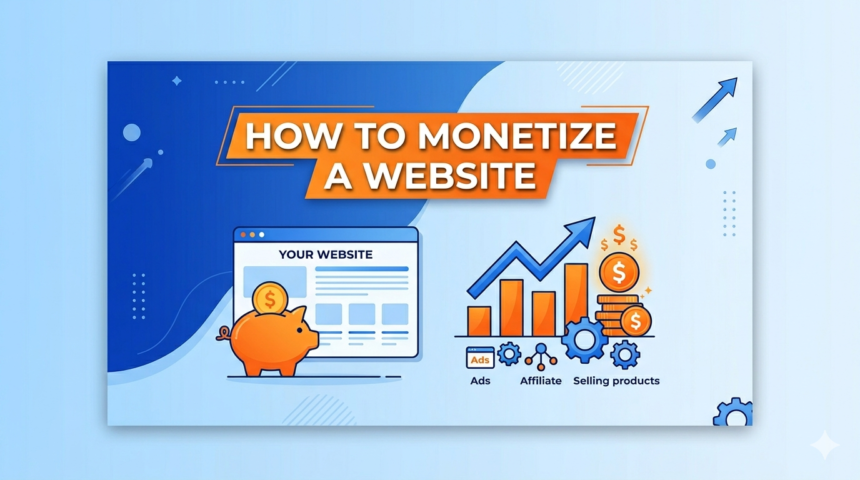
Building a website is easy today, but turning it into a source of income is what most people aim for. Whether you have a blog, business site, or niche website, there are many ways to generate money from your traffic.
In this guide, we will explain how to monetize a website using proven strategies that work in 2026. You will learn different income methods, how they work, and how to choose the best one for your website.
What Does Website Monetization Mean?
Website monetization means earning money from your website traffic. When people visit your site, you can earn income through ads, affiliate links, products, services, or other methods.
The more traffic and engagement your website has, the higher your earning potential becomes.
1. Google AdSense and Display Ads
One of the most common ways to monetize a website is through display advertising.
Google AdSense is a popular ad network that shows ads on your website. You earn money when visitors:
- View ads
- Click on ads
This method is simple and beginner friendly.
Advantages:
- Easy to set up
- Passive income
- Works for almost any niche
However, earnings depend heavily on traffic volume.
To succeed with ads:
- Focus on increasing organic traffic
- Improve page views per session
- Use high quality content
2. Affiliate Marketing
Affiliate marketing is one of the most powerful ways to monetize a website.
It works by promoting products or services using special affiliate links. When someone buys through your link, you earn a commission.
For example:
- Promote hosting services
- Recommend tools or software
- Share product reviews
Advantages:
- High earning potential
- Works well with blogs
- No need to create your own products
To succeed in affiliate marketing:
- Choose relevant products
- Write honest reviews
- Target buying intent keywords
3. Selling Digital Products
Another effective way to monetize a website is by selling digital products.
Digital products include:
- Ebooks
- Online courses
- Templates
- Guides
- Software tools
Advantages:
- High profit margins
- No inventory needed
- Scalable income
For example, a blog about digital growth can sell SEO guides or social media templates.
4. Sponsored Posts
Once your website gets traffic, brands may pay you to publish sponsored content.
Sponsored posts involve:
- Writing articles for brands
- Promoting products or services
- Publishing reviews or features
Advantages:
- High one time payments
- No need for large traffic (sometimes niche matters more)
To attract sponsors:
- Build authority in your niche
- Create high quality content
- Grow consistent traffic
5. Offering Freelance Services
Your website can also act as a platform to sell your skills.
You can offer services like:
- Content writing
- Web design
- SEO services
- Graphic design
- Consulting
Advantages:
- Direct income
- No dependency on ads
- High earning potential
A well structured portfolio website can help you attract clients easily.
6. Membership or Subscription Model
If you have valuable content, you can offer premium access through memberships.
Examples include:
- Exclusive articles
- Premium tutorials
- Private communities
- Paid newsletters
Advantages:
- Recurring monthly income
- Strong audience loyalty
- Scalable over time
This model works best for educational or niche websites.
7. Email Marketing for Monetization
Email marketing is not a direct monetization method but helps increase earnings from other methods.
With an email list, you can:
- Promote affiliate products
- Sell digital products
- Share sponsored offers
- Bring repeat visitors
Email subscribers are more valuable than random traffic because they already trust your content.
8. Dropshipping and E Commerce
If your website supports products, you can start an online store using platforms like WordPress and WooCommerce.
You can:
- Sell physical products
- Use dropshipping models
- Create branded items
Advantages:
- High earning potential
- Global audience reach
- Scalable business model
However, it requires more management compared to ads or affiliate marketing.
9. Online Courses and Coaching
If you are skilled in a specific area, you can monetize your knowledge.
You can offer:
- Video courses
- One on one coaching
- Group training sessions
This method is highly profitable because people are willing to pay for knowledge that helps them grow.
10. Donating or Crowdfunding
Some websites earn money through voluntary support.
Platforms like Patreon allow users to:
- Support creators
- Access exclusive content
- Join communities
This method works best for content creators with loyal audiences.
How to Choose the Best Monetization Method
Not every method works for every website. The best choice depends on your niche and traffic level.
For beginners:
- Google AdSense
- Affiliate marketing
- Freelance services
For growing websites:
- Digital products
- Sponsored posts
- Email marketing
For advanced websites:
- Memberships
- E commerce
- Online courses
Common Mistakes in Website Monetization
Many beginners make mistakes that slow down their earnings:
- Trying too many methods at once
- Ignoring SEO and traffic growth
- Using low quality ads or links
- Not focusing on user experience
Monetization works best when you build traffic first and then scale income methods.
Final Thoughts
Learning how to monetize a website is one of the most important steps in building an online business. There are many ways to earn money, but success depends on traffic, content quality, and consistency.
The key methods include:
- Display ads
- Affiliate marketing
- Digital products
- Sponsored content
- Services and memberships
Start with one or two methods and scale gradually as your website grows.
With the right strategy, your website can become a long term source of passive income and financial growth in 2026.