


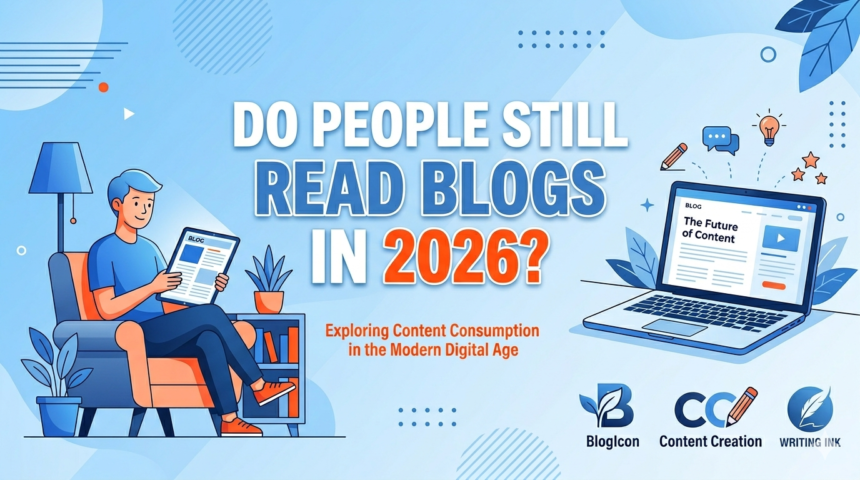
A common question many beginners ask is: do people still read blogs in 2026? With the rise of YouTube, TikTok, and AI tools, many assume that written content is dead. However, the reality is very different. Blogging is not only alive, but it is still one of the strongest ways to get information, learn skills, and grow online businesses.
In fact, millions of people still read blogs every single day, and search engines like Google continue to prioritize written content heavily in search results. Let’s explore clear, practical proof that people still read blogs in 2026 and why blogging is still powerful today.
1. Google Still Sends Massive Traffic to Blogs
The biggest proof that people still read blogs in 2026 is Google itself. Every day, billions of searches are made on Google, and most of the results shown are blog posts or written articles.
For example:
- “how to lose weight”
- “how to install WordPress”
- “best gaming laptops”
- “how to make money online”
When users search these topics, Google usually shows blog articles first, not videos.
This clearly proves that users still prefer reading structured answers. If blogs were dead, Google would not rank them so highly.
2. Websites Like Wikipedia Are Still Among the Most Visited
Another strong proof that people still read blogs in 2026 is the popularity of information-based websites like Wikipedia.
Wikipedia receives billions of visits every month. It is entirely based on written content. People use it to:
- learn concepts
- research topics
- understand definitions
This shows that long-form written content is still highly trusted and widely consumed.
Even in a video-heavy world, people still prefer reading when they want detailed or accurate information.
3. Blogging Traffic Is Still Huge Worldwide
Major blogging platforms and websites still receive massive traffic.
For example:
- Medium articles rank in Google searches daily
- WordPress powers over 40% of all websites on the internet
- News websites publish written articles every second
These platforms prove that people still read blogs in 2026 in large numbers.
If blogging was dead, companies would stop investing in written content—but instead, they are increasing it.
4. Businesses Still Rely on Blog Content for SEO
One of the strongest proofs is the business world. Companies spend billions on content marketing every year.
Why?
Because blogs:
- bring organic traffic
- improve Google rankings
- build brand authority
- generate leads and sales
If written blogs were not being read, companies would not invest so heavily in them.
In fact, studies from marketing industries consistently show that websites with blogs get significantly more traffic than websites without blogs.
This clearly confirms that people still read blogs in 2026 for product research and learning.
5. Blogs Still Outperform Videos in Search Intent
Videos are popular, but they are not always better for quick information.
For example:
If someone searches:
- “what is SEO”
- “how to fix WordPress error”
- “best plugins for WordPress”
They usually prefer reading a quick article rather than watching a 15-minute video.
Why?
Because blogs:
- are faster to scan
- are easier to search within
- provide structured information
- load faster than videos
This is another reason why people still read blogs in 2026, especially for learning and problem-solving.
6. AI Growth Has Increased Blog Consumption, Not Reduced It
Some people thought AI tools would reduce blogging. But the opposite has happened.
AI tools often pull information from:
- blogs
- articles
- written content sources
Even AI systems depend heavily on blog-style content to generate answers.
This means written content is still the foundation of online knowledge.
So instead of replacing blogs, AI has actually increased the demand for high-quality articles, proving again that people still read blogs in 2026.
7. Social Media Still Links Back to Blogs
Another important proof is social media.
Platforms like:
- X (Twitter)
still drive users to blog websites.
People often click links that lead to:
- tutorials
- guides
- product reviews
- news articles
This shows that social media is not replacing blogs—it is actually supporting them.
Users still rely on blogs for deeper explanations.
8. Real User Behavior Shows Blogs Are Still Needed
If we observe user behavior, we see clear patterns:
- People search Google for answers daily
- They read multiple articles before making decisions
- They compare blog posts before buying products
For example:
Before buying a phone, users often read:
- “best budget smartphones 2026”
- “iPhone vs Samsung comparison”
- “top 10 phones under $500”
This is clear evidence that people still read blogs in 2026 for decision-making.
9. Blogging Income Proves People Still Read Blogs
If blogs were not being read, bloggers would not earn money.
But in reality:
- Bloggers earn from Google AdSense
- Affiliate marketing is still growing
- Sponsored blog posts are increasing
This proves that blogs still receive traffic and engagement. No traffic means no income—so blogging earnings are direct proof that readers still exist.
10. Blogs Are Evolving, Not Disappearing
The final truth is simple: blogging is not dying, it is evolving.
Modern blogs now include:
- images
- videos
- AI content tools
- better SEO optimization
- faster websites
Instead of replacing blogs, technology has made them better.
This evolution shows that people still read blogs in 2026, but they prefer more useful, well-structured, and high-quality content.
Final Thoughts
So, do people still read blogs in 2026?
The answer is clearly yes.
From Google search traffic to business marketing, from Wikipedia usage to affiliate marketing income, there is overwhelming proof that blogs are still widely read and highly valuable.
Blogs remain one of the most powerful tools for:
- learning
- SEO traffic
- online income
- information sharing
While formats like video and AI are growing, written content is still the backbone of the internet.
As long as people search for answers, blogs will continue to be read in 2026 and beyond.